Affordability Is the Issue Missouri Families Feel Every Day
June 11, 2026, 8:42 a.m.
Elizabeth Sparks-Holmes says affordability should be discussed in plain language: groceries, gas, housing, utilities, small businesses, and the federal decisions that affect family budgets.
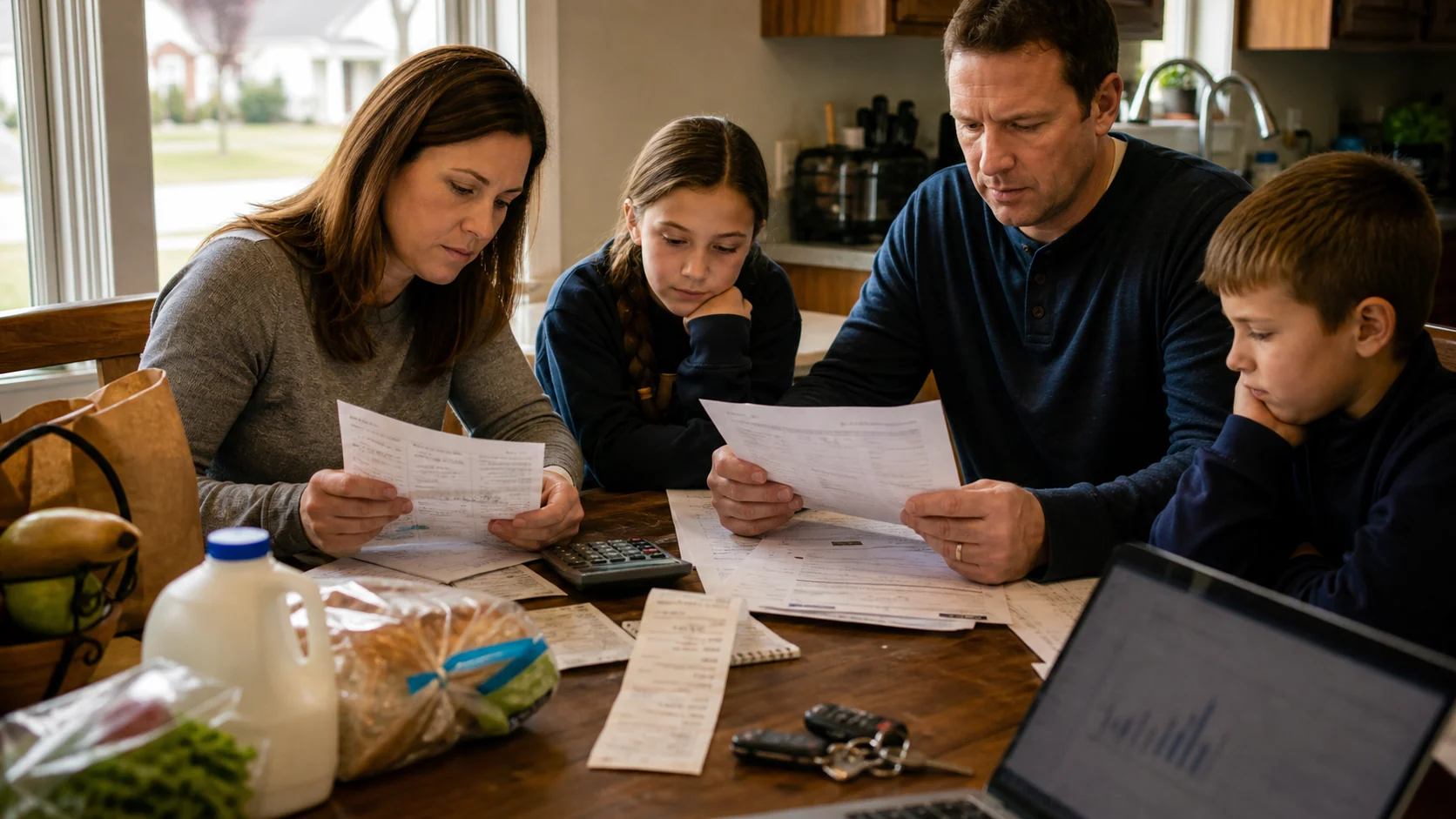
When people in Missouri talk about the economy, they usually do not start with a chart. They start with the price of groceries, the cost of a tank of gas, the mortgage or rent payment, the utility bill, the insurance notice, or the small-business invoice that came in higher than expected. That is where Elizabeth Sparks-Holmes believes the conversation about Washington should begin: not with political slogans, but with the real budget decisions families make every week.
Missouri is still considered one of the more affordable states in the country, and that matters. Families move here, stay here, and raise children here because the state has long offered a chance to build a good life without the price pressure found on the coasts. But being more affordable than other places does not mean families are comfortable. A household can live in a lower-cost state and still feel squeezed when food, gasoline, housing, utilities, medical costs, and interest rates all move against them at the same time.
For Sparks-Holmes, affordability is not just an economic talking point. It is a test of whether elected officials understand the people they represent. A family trying to keep two cars running in a commuter district does not experience energy policy as an academic argument. It shows up at the pump. A senior on a fixed income does not experience inflation as a national statistic. It shows up when prescriptions, utilities, groceries, and property-related costs compete for the same monthly check. A small business owner does not experience federal regulation as a theory. It shows up in paperwork, compliance costs, insurance, taxes, and delayed decisions about hiring.
That is why the campaign is putting affordability at the center of the race. Sparks-Holmes believes Congress should return to a simple discipline that families already understand: spend carefully, stop pretending debt has no consequences, and respect the people who earn the money government spends. Families in Missouri have to make choices. Small businesses have to make choices. Washington should not be exempt from the same seriousness.
A responsible affordability agenda starts with spending restraint. That does not mean ignoring real needs. It means asking whether federal dollars are being used for work that matters, whether programs are delivering results, and whether new spending is being pushed onto taxpayers without an honest plan to pay for it. Sparks-Holmes believes that every dollar taken from a family or a business should be treated as money that belonged to someone who worked for it.
Energy is another practical part of the affordability conversation. Missouri families drive to work, school, medical appointments, church, practices, grocery stores, and job sites. Contractors, delivery companies, farmers, tradespeople, commuters, and parents all feel transportation costs. A pro-family economy should support reliable American energy, modern infrastructure, and policies that keep costs from being made worse by political decisions that ignore daily life outside Washington.
Housing belongs in the same discussion. The St. Louis region has advantages, but younger families, retirees, and workers still need homes they can afford near jobs, schools, and the communities they love. Sparks-Holmes is not promising that Congress can solve every housing problem from Washington. She is saying federal policy should stop making construction, financing, insurance, and local planning harder than they need to be. Local communities should lead, but federal rules should not punish practical housing solutions or bury builders and lenders in unnecessary delay.
Small businesses also need a seat at the table. In every part of the district, local employers are trying to hold on to workers, absorb higher costs, compete with larger companies, and make decisions in an economy that has not felt steady. Sparks-Holmes believes Congress should make it easier for small businesses to grow, not harder. That means simpler rules, a tax environment that rewards work and investment, better access to workforce training, and a government that understands a local employer does not have a full-time compliance department sitting in the back office.
The most important part of an affordability message is honesty. No candidate should pretend there is one button to push that will instantly lower every price. Families know better than that. What they can expect is a representative who keeps the pressure on Washington to stop adding to the problem, who respects the limits of family budgets, who takes energy and housing seriously, and who listens to the people living with the consequences of federal decisions.
Sparks-Holmes says Missouri families deserve a representative who will talk about the economy in the same language they use at home. Can we afford this? Is it necessary? Who pays for it? Does it help people work, save, build, and stay independent? Those are the questions families ask at the kitchen table. They are also the questions Congress should be asking before it spends, regulates, borrows, or promises more than taxpayers can carry.
In the Show Me State, affordability should be measured by real life. Sparks-Holmes is running to keep that reality in front of Washington: the family looking at receipts after dinner, the senior opening a utility bill, the veteran driving to a medical appointment, the contractor filling a truck, the shop owner deciding whether to hire, and the parents trying to give their children a stable future. That is the economy that matters most.