Justice in the St. Peters Hot-Van Case Must Become Stronger Protection for Vulnerable Missourians
June 4, 2026, 1:29 p.m.
The St. Peters case is a reminder that public safety does not only mean responding to crime after it happens. It means protecting people who may not be able to call for help.
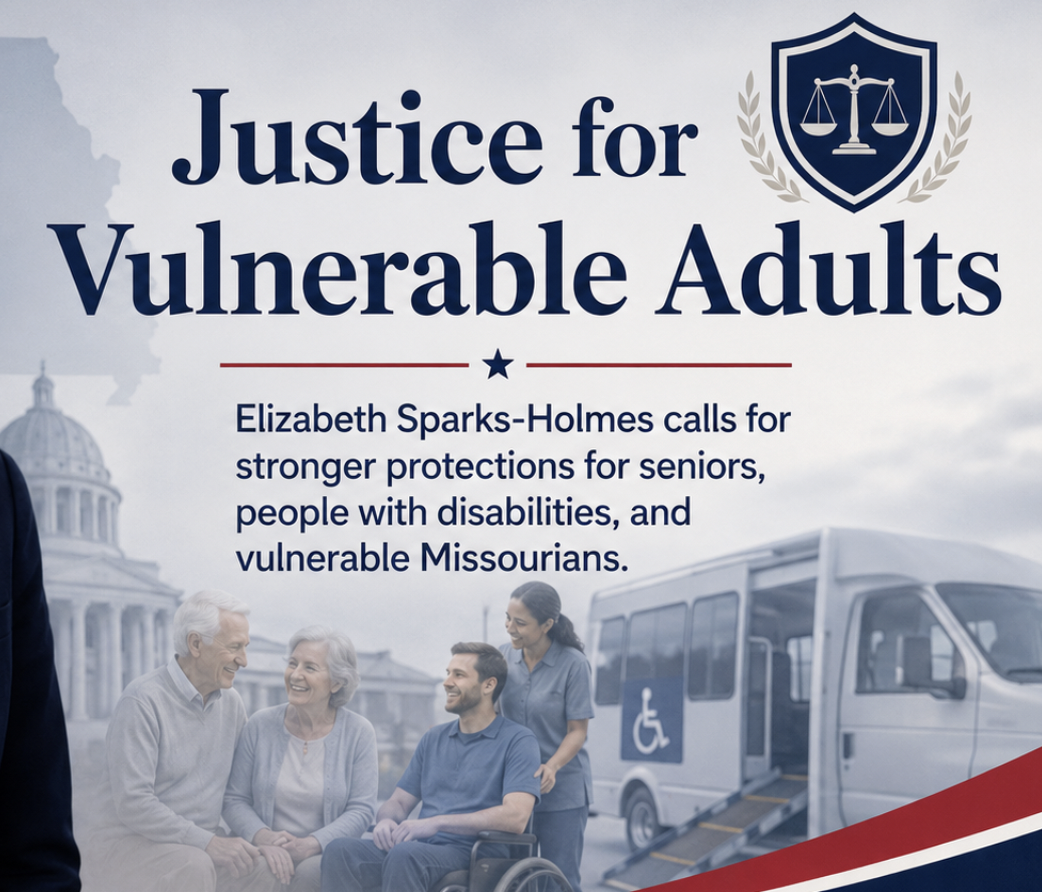
Following local reports that a caregiver has been sentenced in the St. Peters case involving three elderly and vulnerable adults left inside a dangerously hot van, Elizabeth Sparks-Holmes for Congress is expressing support for accountability in the case — and calling for stronger protections for seniors, adults with disabilities, and vulnerable Missourians who depend on others for safe and dignified care.
According to the St. Charles County Prosecuting Attorney’s Office, the case began after police responded to a wellness check involving three elderly individuals found inside a van in 96-degree heat. Prosecutors said the victims were sweating profusely, had special needs, and were later transported to the hospital for heat-related injuries. The office reported that the victims had been left for approximately 40 minutes with the windows up, doors closed, and the engine off. Recent FOX 2 reporting stated that a caregiver was sentenced in connection with the case and reported that the van temperature reached 130 degrees.
“This case should disturb every person of good conscience,” said Elizabeth Sparks-Holmes. “When seniors or adults with disabilities are entrusted to a caregiver, their safety is not optional. Justice in court matters, and I support accountability when vulnerable people are neglected or abused. But justice cannot stop with a sentence. We also have a duty to prevent the next case.”
For Sparks-Holmes, the issue is not only about punishment after harm is done. It is about recognizing that elderly adults, disabled adults, and people with special needs are not simply “patients” or “dependents.” They are citizens with rights — the right to safety, the right to dignity, the right to responsible care, the right to be protected from neglect, and the right to be seen and valued by the systems that are supposed to serve them.
Elizabeth believes Missouri families deserve more than sympathy after a crisis. They deserve practical safeguards before a crisis happens.
That means stronger standards for transporting vulnerable adults. It means clear heat-safety rules for caregivers, facilities, transportation providers, and agencies responsible for people who cannot always advocate for themselves. It means better reporting systems when abuse or neglect is suspected. It means accountability for bad actors — and support, training, and resources for the many caregivers who do their jobs with compassion and integrity every day.
“Most caregivers are hardworking people doing difficult, important work,” Sparks-Holmes said. “But when someone accepts responsibility for another human being’s life, there must be standards, oversight, and consequences. We can support good caregivers while making it absolutely clear that neglecting vulnerable people will not be tolerated.”
Sparks-Holmes has made seniors, eldercare, mental health, people in crisis, and safe communities central parts of her campaign message. Her campaign has emphasized that seniors deserve dignity, caregivers deserve support, and families deserve reliable, respectful care. Her public safety platform also stresses accountability, support for victims, respect for law enforcement, and common-sense solutions that protect Missouri families.
Elizabeth is calling for a renewed focus on what she describes as a Vulnerable Adult Safety and Dignity Agenda, built around five basic principles:
First, prevention. Vulnerable adults should never be left unattended in dangerous conditions, especially in extreme heat or cold. Transportation and care providers should be required to follow clear safety protocols.
Second, accountability. When neglect or abuse occurs, victims and families deserve a justice system that takes the harm seriously and follows through.
Third, transparency. Families should have access to clear information about the standards, training, and oversight of those entrusted with their loved ones’ care.
Fourth, caregiver support. Good caregivers need training, staffing support, and realistic resources so that burnout, poor supervision, or weak systems do not put vulnerable people at risk.
Fifth, dignity. Seniors, disabled adults, and people with special needs must be treated as full human beings whose lives, safety, and comfort matter.
“This is what public service should be about,” Sparks-Holmes said. “Not just reacting after something terrible happens, but listening to families, learning from failures, and fixing the gaps that leave people exposed. Missouri can be a place where seniors are respected, people with disabilities are protected, families are heard, and caregivers are held to a high and honorable standard.”
The St. Peters case is a reminder that public safety does not only mean responding to crime after it happens. It means protecting people who may not be able to call for help. It means standing up for victims whose voices are too often overlooked. It means making sure justice is not only delivered in a courtroom, but built into the way communities care for their most vulnerable neighbors.
Elizabeth Sparks-Holmes believes that support for justice in this case must be matched by a broader commitment: stronger rights, stronger safeguards, and stronger accountability for every senior, disabled adult, and vulnerable person in Missouri.