A Practical Plan to Grow Local Jobs in Missouri's 2nd District
June 11, 2026, 8:40 a.m.
Sparks-Holmes says local job growth should focus on skills, small businesses, advanced manufacturing, logistics, and infrastructure that helps employers hire and expand.
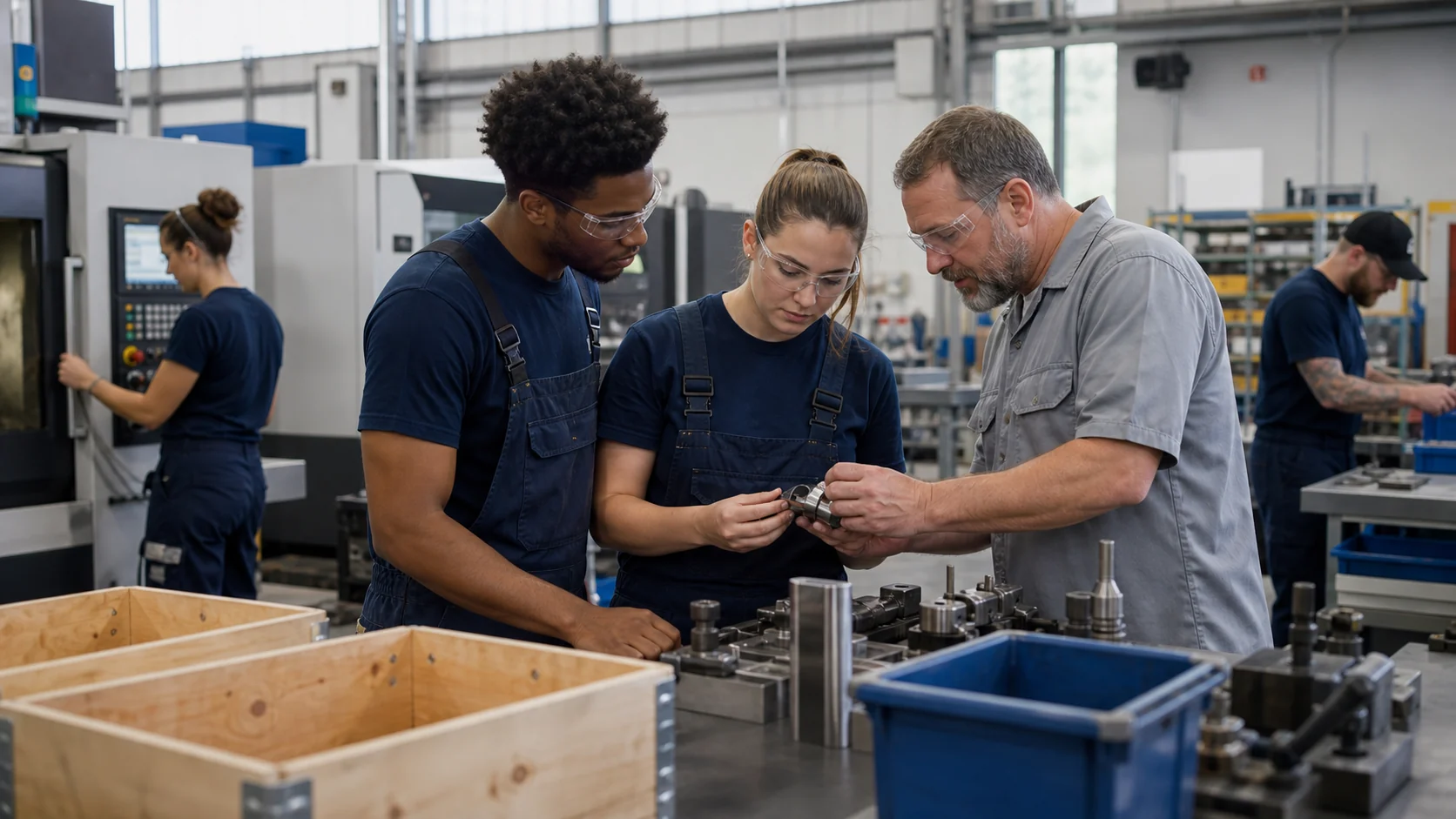
A serious jobs plan for Missouri's 2nd Congressional District should start with a simple goal: help people earn a good living close to home. Elizabeth Sparks-Holmes believes local job growth should be built around practical advantages the region already has, not around slogans that sound good in Washington and disappear when the press release is over.
The St. Louis region has real strengths. Regional economic groups have pointed to advanced manufacturing, logistics, geospatial technology, bioscience, aerospace, transportation, and small business growth as important parts of the area's future. Those sectors are not just words on a planning document. They connect to workers, suppliers, trade programs, machine shops, warehouses, construction firms, health employers, technology companies, and family-owned businesses that need a stable environment to hire and invest.
Sparks-Holmes says Congress should support that kind of growth by focusing on three concrete ideas.
The first is workforce training tied directly to employer needs. Too many workforce conversations begin with institutions and end before they reach the worker. A better approach starts by asking local employers what skills they actually need, then aligning high schools, community colleges, technical programs, apprenticeship pathways, veterans' transition programs, and private training providers around those needs. If a manufacturer needs machinists, if a logistics company needs CDL drivers and maintenance technicians, if a health employer needs support staff, or if an aerospace supplier needs precision workers, the training system should be able to respond quickly.
That does not mean every young person must choose the same path. It means every young person should see more than one respectable path. College is right for many students. So is a trade, an apprenticeship, a certificate, military service, or a job that leads to paid training. Sparks-Holmes believes Washington should stop treating skilled work as second-class work. The district needs welders, nurses, mechanics, coders, technicians, electricians, drivers, builders, bookkeepers, and entrepreneurs. A good jobs plan honors all of them.
The second idea is making it easier for small businesses and local employers to expand. Most job growth does not come from a politician cutting a ribbon. It comes from an owner deciding to add a shift, hire two more people, buy a new piece of equipment, open a second location, or keep a family business alive for another generation. Those decisions depend on confidence. Employers need taxes, rules, permitting, insurance, energy costs, and labor policy to be predictable enough that growth feels possible.
Sparks-Holmes says Congress should review federal rules with small employers in mind. A large corporation can hire teams to handle complexity. A local business often cannot. When regulation is necessary, it should be clear, limited, and designed so honest employers can comply without drowning in paperwork. When tax policy is debated, lawmakers should remember the contractor, the independent shop, the manufacturer, the restaurant owner, the childcare provider, the farmer, and the professional office trying to keep people employed.
The third idea is building the infrastructure that lets jobs happen. A job is not only created inside a building. It depends on roads that move workers and freight, reliable energy, broadband access, site readiness, safe industrial corridors, and communities where families can afford to live. If a company cannot move goods efficiently, if workers cannot reach the site, if permitting drags on for years, or if housing near jobs becomes impossible, local job growth slows before it starts.
That is why Sparks-Holmes connects jobs to transportation and basic infrastructure. St. Charles County, St. Louis County, and the surrounding region compete for investment in a national economy. Employers notice whether roads are reliable, whether freight can move, whether workers can train nearby, and whether local governments and federal agencies can coordinate without wasting time. A representative can help by advocating for fair infrastructure funding, removing unnecessary delay, supporting site preparation, and making sure federal programs reward measurable outcomes.
A strong local jobs agenda should also buy local where possible. The region's economic plans have emphasized entrepreneurship and locally owned businesses for a reason. When local companies become suppliers to larger employers, more dollars stay in the region and more families benefit from growth. Sparks-Holmes believes federal procurement and regional economic development should give qualified local businesses a fair chance to compete, especially when taxpayer dollars are involved.
The jobs conversation should stay grounded in dignity. A good job is more than a paycheck. It gives a person structure, pride, independence, and a way to support a family. It helps young people imagine a future in the place they grew up. It helps parents stay near grandparents. It gives veterans a path after service. It gives people in recovery, people changing careers, and people who felt overlooked a chance to contribute.
Sparks-Holmes is not promising that Congress can create every job or solve every workforce problem from Washington. She is saying Congress can either help or get in the way. It can respect work, support training, keep taxes and regulations reasonable, improve infrastructure, and listen to employers before writing rules that affect them. Or it can keep making decisions without understanding how jobs are actually created.
Missouri's 2nd District deserves the first approach. Sparks-Holmes says the region should build on what it already does well: skilled work, practical innovation, small business grit, manufacturing, logistics, health care, technology, and neighbors who want their communities to succeed. A local jobs plan should not be flashy. It should be useful. Train people for real openings. Make it easier to hire and expand. Build the roads, sites, and systems that help employers grow. That is how a district turns economic potential into paychecks.