What Elizabeth Sparks-Holmes Saw at Ste. Genevieve County Jail
June 17, 2026, 2:57 p.m.
After an unannounced June 10 visit, Elizabeth Sparks-Holmes praised the professionalism, cleanliness, and transparency she observed at the Ste. Genevieve County Jail.
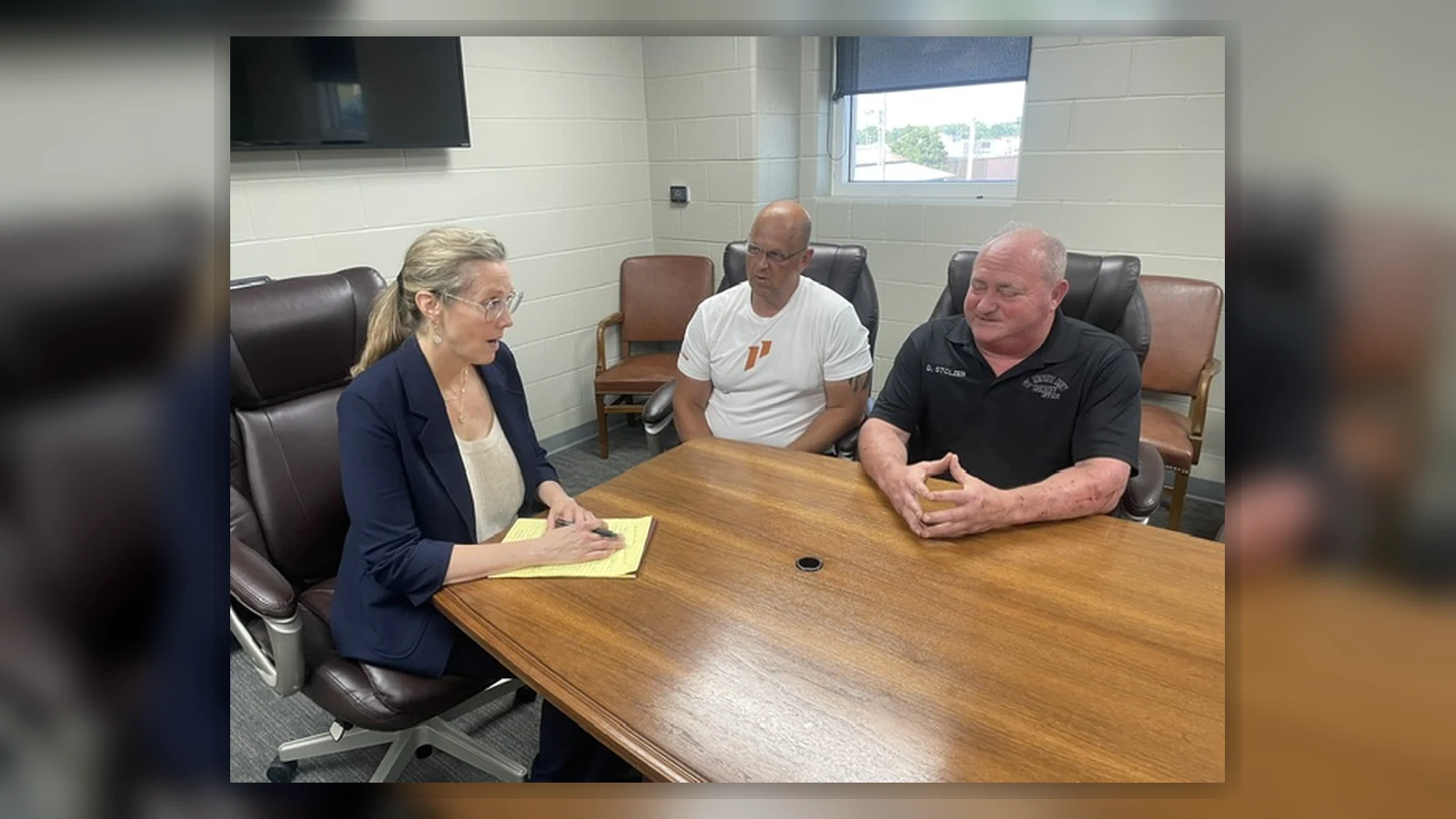
Elizabeth Sparks-Holmes went to Ste. Genevieve County Jail on June 10 because public safety should be judged by what is actually happening on the ground, not by political shortcuts from a distance.
The visit was unannounced. Elizabeth and members of her team went to see the facility for themselves, including the conditions facing ICE detainees, U.S. Marshal detainees, and other individuals held in custody. Her concern was not limited to one category of detainee. Her standard was broader and more serious: anyone held in a city or county facility should be safe, treated with basic dignity, and supervised by staff who take the responsibility seriously.
That is why the access granted by Sheriff Gary Stolzer, Major Jason Schott, and the Ste. Genevieve County staff mattered. According to the campaign, Elizabeth and her team were allowed to see the facility in detail, including holding cells, intake and booking, nursing areas, recreation space, cafeteria conditions, attorney visit space, staff offices, transportation garages, and training areas. The visit was not a staged photograph or a hallway stop. It was the kind of direct inspection voters should expect from anyone asking to represent them in Congress.
Elizabeth left with a clear impression: the staff she met were professional, open, and serious about maintaining a safe and orderly facility.
That matters because the public conversation around detention facilities is often flattened into slogans. On one side, some people talk as if every enforcement action is automatically abusive. On the other side, some people talk as if detention conditions do not matter. Elizabeth rejects both extremes. She supports strong immigration enforcement, lawful removal for those who violate immigration law or commit crimes, and a secure border. She also believes Americans should never be afraid to ask whether a facility is clean, safe, properly run, and respectful of basic human dignity.
At Ste. Genevieve, what she saw did not match the harshest descriptions being circulated about the facility.
Elizabeth thanked Sheriff Stolzer and Major Schott for allowing the visit on short notice and said the dedication of the employees stood out immediately. Her view was that the staff were not treating detainees as political props. They were doing difficult work in a facility that appeared clean, orderly, and well managed.
That should be said plainly. The men and women who work in detention facilities leave their own homes and families to do jobs most people never see up close. They operate under pressure, scrutiny, security risk, staffing demands, and the constant possibility that one mistake can endanger detainees, officers, or the public. When they do the job correctly, they deserve respect. When mistakes or misconduct happen anywhere, they should be investigated and punished. But it is wrong to smear an entire staff or community when the facts do not support it.
Elizabeth's visit also raised an important point about accuracy. She said the ICE detainees she personally observed were separated from U.S. Marshal prisoners and had access to food, water, electronic tablets, attorney spaces, and notary services. She also emphasized that neither she nor Congressman Wesley Bell can legally classify individual detainees as asylum seekers without access to their legal records. That is not a technicality. It is the difference between serious public leadership and political labeling.
Missouri families deserve leaders who tell the truth even when the issue is emotionally charged. Immigration policy should be strong. Enforcement should be real. Dangerous people should not be allowed to remain in the country unlawfully. At the same time, law enforcement agencies and local facilities should be held to high standards, and detainees should not be mistreated.
The balance is not complicated. Enforce the law. Tell the truth. Respect good officers. Punish misconduct. Protect the public. Treat people in custody with dignity.
That is the standard Elizabeth Sparks-Holmes believes Congress should bring to immigration and public safety. It is also the standard she applied by showing up in person.
Ste. Genevieve County did not need another distant political accusation. It needed facts. Elizabeth went to see those facts for herself, and what she found was a facility that, in her view, deserves credit for its cleanliness, transparency, professionalism, and seriousness of purpose.
For Missouri's 2nd District, that is the larger lesson. Representation should mean showing up, asking direct questions, thanking people who are doing the work, and refusing to let politics run ahead of the truth.